

SINDA gave me all-round support in different areas of my life. SINDA’s Back to School Festival and STEP programme provided much-needed financial and educational assistance for me to do better in my studies. After finding out about SINDA’s diverse range of youth programmes, I joined the SINDA Football Club, where I not only improved my football abilities but also developed essential life and leadership skills.
My journey with SINDA has inspired me to positively impact others. Today, I am paying it forward as a Peer Leader with the SINDA Youth Club.

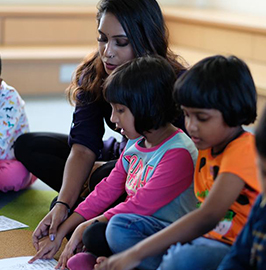
Armed with the firm belief that books are a vital gateway to broadening horizons and imparting worldly knowledge, Preethi is on a quest to cultivate a reading habit in young children. Every week for the last five years, she has been setting aside time from her busy schedule to conduct reading sessions in English and Tamil under SINDA’s Book Wizards programme. Through weekly sessions at the library as well as house visits, she gently nurtures a love for reading in children and helps them enhance their reading abilities. Her dedication and care have not gone unnoticed, and she is now a Volunteer Leader for Book Wizards.
Preethi also volunteers at other SINDA events including BTSF to help secure the financial well-being of students. For her efforts, she was awarded a Five-Year Appreciation Certificate at the SINDA Appreciation Ceremony 2023.



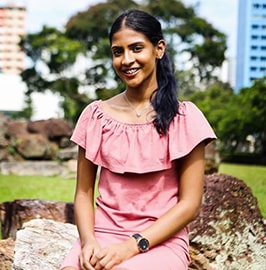
Dhaaneya’s parents separated when she was five, it was a hard pill for her to swallow. Her self-esteem was affected and her academic performance suffered too, as a consequence. As a way to improve her performance, Dhaaneya’s mother enrolled her in SINDA’s Project Read to instil the reading habit in her and motivate her from a young age. While that programme benefited Dhaaneya, her mother too managed to gain help from SINDA through Project Athena – the parenting talks she attended offered her insights into various coping mechanisms and these techniques helped create a positive impact in the lives of both mother and daughter.
Dhaaneya joined her school’s hockey team in secondary school and served as Vice-Captain from 2014 to 2016. She developed a steadfast leadership style that encouraged her team in resilience and sportsmanship, which helped the team achieve their best performance. Under Dhaaneya’s leadership, the hockey team went on to gain victory at the National ‘C’ Division Girls Hockey Championship in 2014 and the National ‘B’ Division Girls Hockey Championships in 2015 and 2016!
Her involvement and dedication in sports helped her find the spirit to excel at what she does and she applied that to her academics to improve her grades. “When I started playing hockey, I realised I enjoy playing this sport very much and found myself striving to give my best during training. That was when it occurred to me that if I learn to like what I do, I am capable of performing well. Hockey will always be special to me for teaching me that if I put my heart and soul into something and I don’t give up despite facing challenges, I will achieve what I want. So, I adopted that same attitude towards my studies as well.”
Dhaaneya gradually improved and in Secondary 4, qualified for the Polytechnic Foundation Programme, open only to the top 20% of Normal Academic students. She began her post-secondary education in Business Studies at Temasek Polytechnic two years ago and is currently receiving the Director’s List Award. She manages all these, while also juggling part-time work to help alleviate the financial burdens on her mother. In recognition of her enduring spirit, SINDA nominated Dhaaneya for the Singapore Indian Chambers of Commerce & Industry (SICCI) Indian Women of the Year Awards 2019 and she was a finalist for the ‘Young Achiever Award’.
“In future, as a form of giving back to the community, I plan to start a hockey academy for children from single-parent homes,” says Dhaaneya.
In his National Day Rally, the Prime Minister covered many important topics. One of these is the government’s commitment to helping every Singaporean to succeed irrespective of background.
All Singaporean children can get a good education in our national schools. Over the years we have enhanced our education system - we have introduced specialised schools, applied learning, different CCAs and sports, done away with streaming and introduced subject-based banding. We have put a greater focus on skills, which is highly valued by employers and re-balanced the emphasis on purely academic outcomes. Through ITE, our polytechnics, universities and Skillsfuture we are creating multiple pathways for our children to achieve success.
We are now doing much more in the pre-school space. Research shows that the pre-school years have a great impact on how well a child does in later life. Unlike primary school where the focus is more on cognitive development, what is important in the pre-school years is the social and emotional development of the child. A pre-school child who is emotionally secure, and learns how to play and interact with peers and adults and encouraged to explore and be curious tends to fare better in life than one who does not have these attributes. The learning of languages is also far more easily acquired and retained when learnt in the early years. Pre-school education which focuses on social and emotional development and language learning is therefore important.
Recognising this, the government has made moves in recent years to improve the accessibility, quality and affordability of pre-school education. We have doubled the full-day pre-school capacity and upgraded pre-schools. We also set up the MOE kindergartens which offer all 3 other mother tongue languages. We set up the National Institute of Early Childhood Development (NIEC) to upgrade the teaching and training of our pre-school teachers.
Recognising that the costs of pre-school education can be an issue for young parents, we took initial steps to lower the costs of pre-school through the anchor operator, partner operator schemes and the MOE kindergartens. This has helped lower costs. However, we know that for middle-income families with very young children pre-school fees still take up a substantial part of their budgets.
Hence, as announced at National Day Rally, the government is enhancing pre-school subsidies to make it more affordable for young families:
- We have raised the qualifying household income ceiling from $7500 to $12,000 per month. This will immediately extend the subsidies to 30,000 more households;
- In addition, the government will also increase the amount of pre-school subsidies across the board.
As mentioned by PM, we aim to bring down full-day pre-school expenses to around the level of that for primary school, if you include after school student care.
To complement the government-led pre-school initiatives, SINDA has a literacy and numeracy (LYNN) programme for Indian pre-schoolers, as well as a pre-school Tamil enrichment which are also heavily subsidised. I would encourage Indian families to take advantage of these programmes.
At the other end of the education pipeline, we have also done a review of tertiary fees and bursaries. To ensure that students from less well-off families are not prevented from pursuing further studies, MOE is significantly enhancing government bursaries.
- For university, government bursaries will be increased from 50% of general fees to 75%.
- In addition, we will increase the bursary for those studying medicine so that lower-income students need only to pay at most $5000.
- For polytechnic diploma programmes, we will increase the bursaries from the current 80% of fees to 95%.
In addition to government bursaries, Indian students in need of financial assistance for tertiary studies can also apply to the Singapore Indian Education Trust (SIET) for bursaries, scholarships and loans.
We hope that these moves by MOE and the complementary programmes by SINDA and SIET will ease the financial outlay of lower and middle-income families and help put our children on the path for success.
This is an excerpt from a monthly column where pertinent themes and concerns relating to the Indian community are discussed by Ms Indranee Rajah, Minister, Prime Minister's Office, Second Minister for Finance, Second Minister for Education and President, SINDA.
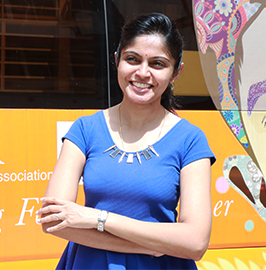
In 2016, homemaker Mdm Santhi was facing a challenging family situation. “I was feeling demoralised and upset all the time. My children weren’t able to attend school then, and I was worried that their education was being affected. Then, a friend of mine encouraged me to approach SINDA for help,” said the 40-year-old.
SINDA’s Family Service Centre assisted in enrolling Mdm Santhi’s children in primary and secondary school, and also introduced her to parenting and enrichment programmes available at SINDA. Till date, she has participated in Project Athena and the Triple-P Parenting Programme.
“During those tough times, I felt like I was at rock-bottom. And even after I recently decided to re-enter the workforce, I knew I had to be mindful of my capabilities and limits, so I could come up with a realistic plan for myself. Attending Project Athena helped me evaluate what I knew, and understand the actions I had to take,” said Mdm Santhi.
Under Project Athena, Mdm Santhi attended talks on women’s empowerment, where she learnt to identify her strengths, weaknesses and areas of improvement. “Before attending Project Athena, I was mostly reserved, and I didn’t speak up. Over time, I developed the courage to voice out my opinions during sessions. With regards to career guidance, I picked up many resources and courses I could use for my self-improvement. I even received an award in recognition of my new-found confidence!”
Additionally, Mdm Santhi attended the Triple-P Programme to improve her parenting methods and understand her children better. “I’ve a background in early childhood education, so the programme added value to my knowledge. A key learning point was to set aside time to listen to my children. If they want to speak to me in private, they’ll write me messages and leave them in a box at home. Every two days or so, I’ll retrieve the messages and make it a point to talk to them individually about what they’ve written. My children have different characters and personalities, so I use different approaches for each of them. The programme has made me become a more empathetic mother – after learning to be a good listening ear for my kids, I’m able to understand them and address their needs.”
With her children settled in school, Mdm Santhi is able to devote more time to her own development. She has taken several SkillsFuture courses to upgrade herself, and is currently enrolled in a course at the Lifelong Learning Institute. “I was able to come this far, because of the encouragement and support from my mum, kids and relatives; they were my biggest supporters. As the saying goes - when one door closes, another door will open. So, hold on to anything that inspires you. To add to that, we also come across many women who are facing challenging situations. We should uplift them, instead of demoralising them further. Support other women; lend them a helping hand.”
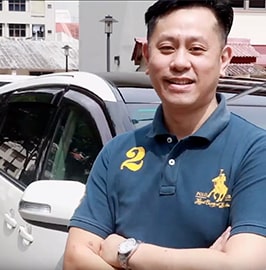
“There are no borders when it comes to helping people,” says Mr Thomas Pang, a volunteer with SINDA. The 47-year-old, who has been volunteering with SINDA for close to 2 years, says his experience thus far has given him more opportunities to serve the community in a fruitful way, as well as to spend quality time with his family.
Mr Pang, a Grab driver, first heard of SINDA’s volunteer opportunities through a conversation with a passenger. The idea of helping other people on a variable-time basis appealed to him, and soon he was helping to distribute vouchers and Festive Gift Packs to families during the festive seasons. He also assisted with preparing the vouchers, organising and carrying out distribution drives at residential areas. “I realised that I would be able to volunteer with SINDA, work comfortably and still set time aside for my family,” explained Mr Pang.
During the recent distribution drive, Mr Pang took on more responsibilities; leading groups of volunteers, briefing them on their duties, explaining do’s and don’ts and being on-call to help if any issues arose. Additionally, he has had more volunteers assigned to him to help the newer groups of helping hands.
Speaking of helping hands, Mr Pang has also been volunteering with his family! At first, his children were reluctant to the idea, as they would have to give up playing games on weekends. However, they began to see the merits of helping others after participating in SINDA’s volunteer efforts. Mr Pang’s eldest son, who is 18 years old, has since become a registered volunteer with SINDA as well! As Mr Pang affirmed, “We feel very happy to see people smiling because of what we have done; those smiles are invaluable to us. As for my family, we are much closer than before, because of the opportunities we received through volunteering to bond with one another.”
There is the oft-asked question – how did Mr Pang find volunteering with an Indian organisation, despite the language barrier? “It wasn’t really a difficult issue, because my goal was to help others. Without speaking the same language, we were all still able to communicate and get work done. When people from different communities help each other, the social fabric of Singapore gets strengthened and diversified. I feel that’s what we should encourage among the future generations - help your fellow Singaporeans and build a system of support and encouragement. I don’t speak Tamil for now - but who knows, maybe in the future?” he quips.
According to Mr Pang, the positive energy he feels from helping others is what makes him continue volunteering. “Needless to say, monetary contributions go a long way. But when one invests their own time and resources into physically helping others, the assistance is so much more meaningful,” he reasons. “Helping the community should go beyond just monetary assistance.”
Through his experiences, the father of four wishes to inspire others to volunteer and make positive differences in their lives, as well as others’. “Volunteering with your loved ones is also a good way to spend time with them. Shopping and dining out are also ways to bond, but volunteering together is a much more meaningful way of spending time together. Your time is spent constructively, you are helping others, and you can concurrently improve your relationships.”

Ask an average teenager what inspired their ambition, and most wouldn’t cite a television programme they happened to watch by chance – but Preethi Peramanathan would. The 14-year-old watched a Korean drama where the protagonist had a rough childhood, but studied hard to become a neurosurgeon. Likewise, Preethi wishes to pursue a career in a field related to medicine or science.
However, Preethi wasn’t this assured of her future at first. “Before STEP, I found Maths to be boring. I aimed to score 80s, but I ended up with 60s and 70s. I couldn’t solve difficult questions and that proved to be a challenge for me. However, my STEP tutor helped me to improve my concentration in Maths. After getting better at solving complex problems, I began to gain interest in the subject.”
As for Science, Preethi had a pre-existing interest in the subject, but wasn’t able to score adequately due to the way she phrased her answers. Subsequently, she sought her STEP tutors’ help on structuring her sentences to reflect key words. “Most of the questions that we came across in STEP were questions I could apply to real-life situations,” she said.
Preethi, who is currently in Secondary 2, cites STEP’s learning environment as conducive and capable of facilitating learning for all. “During our lessons, we would combine our tables and work together. We were free to ask questions. The tutor would explain the solution to everyone so we could all learn. She would also use this as a chance to test us on how much we had learnt.”
The tuition lessons had also enabled Preethi to forge friendships with students from different schools. “For example, students at inter-school competitions have the opportunity to go to other schools and learn from those students. Similarly, when we see our friends from STEP at competitions, we can catch up with them. Networking is an important skill that I learnt through STEP – we are able to know more people, and improve our social interaction skills.”
Mr Nathan, Preethi’s father, is also proud of the changes he has seen in his daughter. “Previously, Preethi would use her phone excessively and ended up being distracted from her studies. Now, she is more confident in her approach towards studies, and concentrates better,” he says.
In recognition of her improvement, Preethi won the Sustained Improvement Award for Mathematics and Science in September this year. She studies with her friends before major exams, saying that “more minds are better than one”. She also reviews her past worksheets and identifies areas to pay more attention to during the exams. On days when she has co-curricular activities, she reads through her notes on the way home from school.
In her words? “It’s important to think carefully before choosing your subject options, as it will determine your career choices later on. Do your best at everything, and don’t be playful when it comes to examinations.”