

SINDA gave me all-round support in different areas of my life. SINDA’s Back to School Festival and STEP programme provided much-needed financial and educational assistance for me to do better in my studies. After finding out about SINDA’s diverse range of youth programmes, I joined the SINDA Football Club, where I not only improved my football abilities but also developed essential life and leadership skills.
My journey with SINDA has inspired me to positively impact others. Today, I am paying it forward as a Peer Leader with the SINDA Youth Club.

Armed with the firm belief that books are a vital gateway to broadening horizons and imparting worldly knowledge, Preethi is on a quest to cultivate a reading habit in young children. Every week for the last five years, she has been setting aside time from her busy schedule to conduct reading sessions in English and Tamil under SINDA’s Book Wizards programme. Through weekly sessions at the library as well as house visits, she gently nurtures a love for reading in children and helps them enhance their reading abilities. Her dedication and care have not gone unnoticed, and she is now a Volunteer Leader for Book Wizards.
Preethi also volunteers at other SINDA events including BTSF to help secure the financial well-being of students. For her efforts, she was awarded a Five-Year Appreciation Certificate at the SINDA Appreciation Ceremony 2023.




As an alumnus of the Camp Arise and GAME Dance programmes, Kesavan Krisnan has been an avid participant of SINDA’s programmes. He participated in ITE Aspire, a 10-week programme for Institute of Technological Education (ITE) students to cultivate their aspirations, upgrade their soft skills and develop their confidence and resilience. Kesavan’s love for dance piqued his interest in ITE Aspire. “Dance is something I’m very passionate about. So when I heard that they would be combining dance and soft skills in one programme, I was excited to join it!”
As a key takeaway from the programme, Kesavan cited people-management skills. “There were times when I had difficulties communicating to a large group of people. ITE Aspire taught me various useful ways I could overcome those difficulties and manage them effectively.”
The 20-year-old, who was crowned Valedictorian at the 2017 SINDA Youth Awards for his determination and hard work despite facing challenges, eventually became one of the top students among his school’s ‘N’ Level cohort. He attributes his success to the support received from his family, school and SINDA. “ITE Aspire felt like a co-curricular activity (CCA) instead of a programme,” he said. “I learnt leadership qualities that helped me overcome challenging situations in life or studies. The dance segments kept me fit and positive, so I was able to relax and enjoy my afternoons with my friends.”
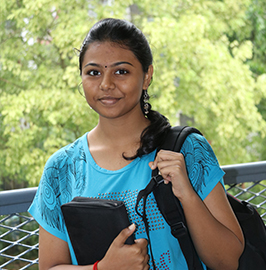
16-year-old Thivyashalini Ramkumar may be anticipating her national exams this year, but she has already begun 2018 on a successful note. Along with winning the ‘Best Speaker’ award at this year’s Sorkkalam, the biennial Tamil-language debate competition telecast on Vasantham channel, she also won the finals with her schoolmates. The vivacious and eloquent student attributes her interest in debates to the public-speaking and story-telling competitions she participated in as a primary school student. “After making it until the quarter finals in 2016, it is so heartening to have won Sorkkalam this year,” she said.
Thivyashalini credits her parents and her tutors at STEP tuition with helping her manage her time between the competition, studies, tuition and co-curricular activities. She joined STEP in 2010 as a Primary 2 student, and has since built her foundation and polished her basics in Mathematics and Science through the programme. “I always had opportunities to clear my doubtsand that helped to gradually improve my grades. My tutors guided me with patience and sincerity, and their lessons were not only engaging, but enjoyable too.”
When asked what motivates her, Thivyashalini cites the thought of success and the support she gets from her parents, teachers and relatives. “Work hard, don’t procrastinate and stay committed to your goals,” she says as a word of advice. “Always remember the people who have helped you and don’t forget to reciprocate their kindness.”
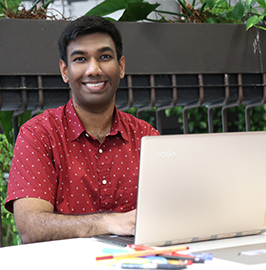
“Biology is a subject that is constantly evolving and there are always mysteries that are yet to be solved, which attracted my attention to it,” says Bernard Patrick, a recipient of the Singapore Chinese Chamber of Commerce Foundation (SCCCF) – SINDA Scholarship 2017.
Bernard was determined to pursue a career in biological sciences after completing an overseas internship during his polytechnic years. However, his father’s retrenchment in late 2017 meant that Bernard had to balance a part-time job and studies. Subsequently, he decided to apply for the SCCCF-SINDA Scholarship. “SINDA played a key role as a pillar of support during my tertiary education by graciously offering me the scholarship, I was able to focus on my university studies without worrying about my financial issues,” Bernard says. “I would encourage anyone in a similar situation to apply for scholarships, as they not only encompass monetary assistance, but entail networking opportunities also.”
Upon being awarded the scholarship, Bernard gained exposure to a diverse platform of people from various disciplines. Through networking, he was fortunate to meet and discuss his findings with researchers from established institutes such as A*STAR. On his decision to someday specialise in the field of cancer research, Bernard says that he would like to do his part to keep the disease at bay through his research efforts.
The 24-year-old is currently pursuing his Bachelor’s in Biological Sciences at Nanyang Technological University (NTU) and aims to work for the National University Cancer Institute one day. In the long-term, Bernard plans to contribute to society by helping the younger generation achieve their goals. A piece of advice for his peers? “Never stop learning. The people you meet and the experiences you come across will inspire you to improve on your strengths and weaknesses. Forge lasting bonds with positive people and surround yourself with them – they will bring out the best in you!”

The family is the basic building block of our society. Most Singaporean families enjoy strong family ties, with 90% satisfied with their family life. A strong family unit is one that is loving, supportive and united.
Unfortunately, not all families enjoy stable relationships. Some are afflicted by family violence, which can have long-lasting and detrimental effects on the individual family members. Family violence is not restricted to any community or race. It occurs across the board. However, educational, ethnic and cultural factors may affect how people respond to it.
According to PAVE, among Indian families, the most common forms of family violence are spousal violence, child abuse and cases where adult children abuse their parents or vice versa. Victims are sometimes unwilling or unable to seek help. Some children may be too young to seek help; elderly may be physically or mentally unable to do so.
Women are especially hesitant to seek help, owing to a number of reasons:
- They believe that love and care will eventually change the perpetrator.
- They are dependent financially on the perpetrator.
- They feel that they have to tolerate abuse for the sake of their children.
- They fear their spouse’s reaction if they were to seek help.
- Such victims tend to suffer in silence, fearing the shame that may arise when their relatives find out, or out of guilt that they had done something to deserve this violence. Their ordeal may not be obvious to others as victims usually conceal the pain and physical abuse.
However, keeping silent about family violence or domestic abuse is not the right thing to do.
First, if left unreported, the victims will continue to suffer. Family violence can be long-lasting, and negatively impact the victims throughout life.
Children are severely impacted by violence, both emotionally and cognitively. Research shows that children’s capacity to think or reason is affected by the trauma of witnessing violence, with some studies suggesting that exposure to spousal abuse can affect a child’s ability to process and use new information. Hence, continuous exposure to spousal violence not only affects children mentally but also academically, diminishing their lingual and mathematical skills.
Repetitive exposure to spousal violence can also result in post-traumatic stress disorder (PTSD) in children, which is sometimes not obvious to parents who are in constant conflict.
Second, not reporting the violence also means that the person who committed the violence is not helped. Often perpetrators who commit family violence do so because that is what they saw their parent(s) do when they were children. In other cases, they are venting their frustrations and anger on more vulnerable family members because they are unable to address or resolve the underlying issues which give rise to the anger and frustration. These people need help in order to change their behaviour. They need to understand that what they are doing is wrong, how much their actions are hurting their loved ones and the high price the family pays for the abuse. In some cases, a criminal penalty or sanction is necessary.
In order to break the cycle of family violence, a pro-active and enlightened approach is needed.
- Victims should have the courage to report it or tell someone who can help.
- Perpetrators should have the courage to admit they have a problem and seek help to change.
- The community should denounce the violence, but be supportive of the victims and also make clear to the perpetrators that they must change.
While the fear that bringing the matter to light is shameful or will result in punishment for the perpetrators, it is better to bring it to light, then work together as a family and as a community to address the problem. In the long run, addressing the problem head-on is better than keeping quiet and leaving it unresolved.
Help is readily available for those who require it.
Persons who need help can approach PAVE, Singapore’s pioneering family violence specialist centre, which works to promote a healthy community, free from violence. Its services are for victims, perpetrators, survivors and vulnerable family members such as children and the elderly.
Members of the community can also approach the SINDA Family Service Centre (SFSC). The SFSC is well-positioned to offer families all-round assistance and counselling, including programmes for the families’ holistic development.
For children who live in violent homes, trauma-focused cognitive behaviour therapy is available in schools, family service centres and family violence specialist centres.
Family members who are victims of family violence can apply for a Personal Protection Order (PPO) or an Expedited Protection Order (EPO) from the Family Courts. In extreme cases when the perpetrator poses a serious danger to the family, the Courts can order the perpetrators to leave the home under a Domestic Exclusion Order (DEO).
Those who need legal advice or representation but are unable to afford it can also approach the Legal Aid Bureau (LAB), the Community Justice Centre or the Community Legal Clinics.
We should work together to stop the problem of family violence, and encourage instead a strong healthy environment of love and respect in families.
This is an excerpt from a monthly column where pertinent themes and concerns relating to the Indian community are discussed by Ms Indranee Rajah, Minister, Prime Minister's Office, Second Minister for Law, Second Minister for Finance and Second Minister for Education and President, SINDA

21 year-old Vishnupriya joined SINDA Sports Initiative, also known as SPIN, hoping to effect some positive changes in her life – both physically and mentally. She took part in SPIN twice and strongly feels that exercise and adopting a healthy lifestyle has had a huge impact on her.
“Exercise, keeping fit and partaking in sports do not just change you into a physically healthy person – it empowers your mental health as well. And for me, hitting the gym is the best stress reliever during any tough times.”
She feels her biggest takeaway from this programme is how it has helped her change her mind set and outlook of life, for the better. These are things she considers very important as it will help her in the long run. We all know the importance of a teacher’s role in imparting knowledge and helping someone learn something thoroughly. For Vishnupriya, her teachers in SPIN were her coaches and both of them contributed greatly to her learning about perseverance and cultivating discipline. Most importantly, through exercise, they taught her that above all, it’s developing an optimistic personality that will help her overcome anything in the various stages of her life.